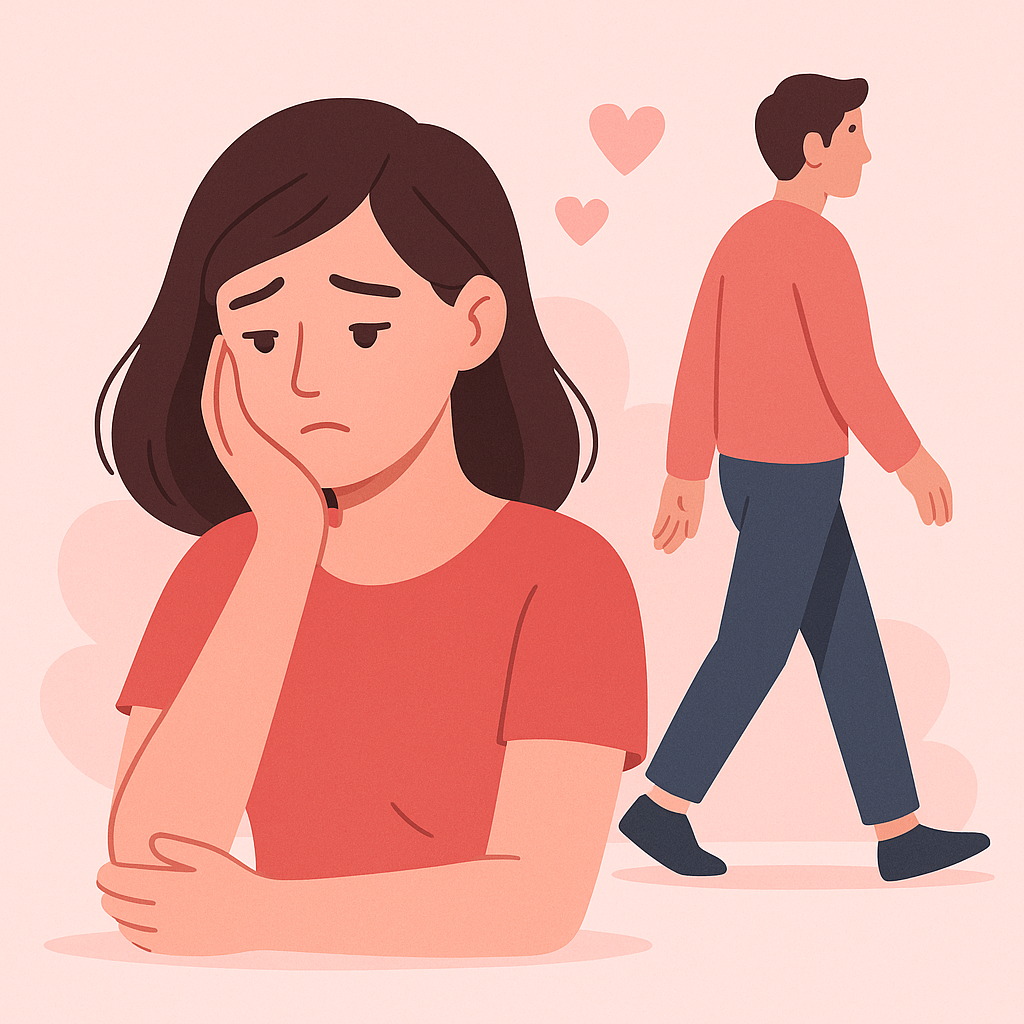

Why Men Pull Away (And What Smart Women Should Do About It in 2025)
When a man who seemed engaged suddenly pulls away, it can feel confusing, painful, and destabilizing. The good news: pulling away is a common human response (not always a sign of rejection), and there are clear, effective ways to respond that preserve your dignity and increase clarity. This guide explains why men pull away, what it usually means, and practical steps smart women can take in 2025 dating culture to handle withdrawal without chasing, panicking, or losing self-respect.
Quick overview — the three simple truths
- Pulling away can be about him, not you — fear, stress, or attachment style often drive it.
- Not all pullback equals disinterest — some men withdraw to process emotions or regain independence.
- Your most powerful responses are calm, clear, and boundary-respecting — not frantic or reactive.
Why men pull away: the most common reasons (with examples)
1. Fear of intimacy or vulnerability
Some men retreat when emotions deepen. The closer they feel, the more they fear being hurt or expected to change. This causes them to back off to avoid vulnerability.
2. Stress or life pressure
Work, family issues, health, or financial stress can make him temporarily unavailable. Withdrawal here is an energy-management move, not necessarily emotional coldness.
3. Avoidant attachment style
People with avoidant attachment cope by distancing themselves emotionally. They often value independence highly and pull away when things become emotionally intense.
4. He’s unsure or re-evaluating the relationship
Sometimes withdrawal is a signal: he’s thinking about compatibility, future plans, or long-term fit. That time-out can be useful — if used respectfully.
5. He’s testing the dynamic
Some men withdraw to see how you respond; it’s a (not ideal) test of your interest. This behavior is immature but common — and easily identifiable.
6. He’s losing interest
Occasionally pullback is because the attraction or excitement faded. The difference is in the pattern: fade often shows reduced effort across the board.
How to tell which reason fits — the diagnostic checklist
Use this short checklist to interpret his pullback:
- Pattern: Is this sudden or recurrent? Recurrent patterns suggest attachment styles.
- Context: Is he under life stress (work, family) right now?
- Communication quality: Does he still communicate thoughtfully when he does reach out?
- Effort when present: When he’s present, is he warm and engaged?
- Transparency: Does he explain his need for space or disappear without a word?
Put these signals together — patterns reveal motives better than single behaviors.
How NOT to respond (common mistakes)
When men pull away, women often do one of these — which rarely helps:
- Chasing him relentlessly: Flooding with messages, calls, or emotional appeals.
- Playing games: Ignoring him intentionally to “teach him a lesson.”
- Public confrontation: Calling him out on social media or in front of friends.
- Self-blame spiral: Assuming you did something wrong without checking facts.
These reactions usually trigger more withdrawal, resentment, and confusion.
Calm, effective responses that preserve your dignity
Below are step-by-step approaches you can use depending on the likely cause of the pullback.
Response A — If life stress seems likely
- Give a short, compassionate message: “I know you’re busy — I’m here if you need me.”
- Don’t demand frequent updates — let him return on his timeline.
- Watch for signs of re-engagement; if he resurfaces warmly, offer a low-pressure hangout.
Response B — If fear of intimacy / avoidant pattern
- Keep your expectations clear and steady; say: “I value honesty. If you need space, tell me.”
- Set a boundary: “I respect that, but I also need to know if this is temporary.”
- Give measured space but avoid chasing — allow him the room to decide.
Response C — If he seems to be testing your interest
- Stay calm and matter-of-fact. Avoid panic or dramatic exits.
- Send a simple, neutral check-in: “Everything okay? You felt distant.”
- Observe: if he apologizes and reconnects, then consistency matters moving forward.
Response D — If he’s pulling away because of lost interest
- Don’t beg. Accept the reality and preserve your self-respect.
- Ask once with clarity if you need closure: “I’ve noticed distance — do you see this going further?”
- Move on if he confirms loss of interest. It’s painful but healthier long-term.
Timing matters — the 72-hour clarity rule
Give thoughtful space, then ask directly after a reasonable window. For most modern dating situations, a calm check-in after 72 hours (3 days) is fair — unless he explained needing longer. This avoids emotional flooding and gives you information quickly.
How to use conversations to increase clarity (scripts that work)
Here are short, non-confrontational phrases you can use depending on tone and relationship stage:
- Gentle check-in: “Hey — noticed you’ve been quieter. Everything okay?”
- Set boundary + offer choice: “If you need space, I get it. I’d appreciate a heads-up so I don’t worry.”
- Ask for clarity: “I like where this is going and want to know how you feel.”
- If you need closure: “I want to be honest — I need someone who can meet me halfway.”
When pullback becomes a recurring pattern
If he repeatedly withdraws and then reappears, that’s a relationship pattern — and patterns predict future behavior. Recurrent pull-away cycles often signal:
- Unresolved attachment issues
- Emotional immaturity
- A mismatch in relationship readiness
In these cases, the healthiest move is either couples conversation, clear boundaries, or — if nothing changes — walking away.
Pros & Cons — responding vs reacting
| Calm response (recommended) | Reactive response (not recommended) |
|---|---|
| Gives clarity and preserves dignity | Invites more distance and drama |
| Identifies underlying cause | Confuses motives and emotions |
| Builds healthy boundaries | Breaks trust and respect |
When to seek outside support
If pullback triggers anxiety, obsessive checking behaviors, or if you’re repeatedly in relationships with avoidant partners, a few options can help:
- Talk to a trusted friend for perspective (not to vent endlessly).
- Consider short-term coaching focused on boundaries and communication.
- If patterns are deep, therapy helps you unpack attachment styles and break cycles.
Final notes — preserving your worth while getting clarity
The best response to a man pulling away is a calm mixture of curiosity, boundary-setting, and self-respect. You do not need to win someone back by losing your standards. If he values you, he will communicate; if he doesn’t, you’ll have clarity sooner. Either way, your dignity remains intact.
FAQs
- How long should I wait before asking what’s going on?
- Give 48–72 hours unless he explained needing more time. Then do a calm check-in.
- What if he apologizes but repeats the behavior?
- Patterns are predictive. If it repeats, set stronger boundaries or consider stepping away.
- Is pullback always a dealbreaker?
- No — sometimes it’s temporary. It becomes a problem when it’s frequent, unexplained, or paired with disrespect.
Disclaimer: This guide explains common behavioral patterns observed in dating up to 2025. Individual situations vary — prioritize your safety, mental health, and personal boundaries. If you’re in an abusive or controlling relationship, seek professional help immediately.
Modern 2025 dating factors that amplify pullback
In 2025, dating apps, constant notifications, and remote work have changed how connection and distance show up in relationships. It is easier than ever for someone to disappear behind a screen, mute a chat, or swipe toward a new distraction instead of facing uncomfortable feelings directly. At the same time, there is more language than ever around attachment styles, boundaries, and emotional safety, which can empower you to respond from a grounded place instead of panic.
Technology also speeds up early intimacy, which can make pullback feel even more shocking. You might go from all-day texting, video calls, and shared playlists to short, delayed messages with no clear explanation. That sudden drop in intensity can activate old wounds or abandonment fears, even when the behavior is more about his overwhelm than your worth. Understanding this modern context helps you respond from awareness instead of self-blame.
Healthy vs unhealthy space — knowing the difference
Not all distance is harmful. Healthy space allows two people to breathe, reflect, and keep their individual identities, while unhealthy distance feels like punishment or silent control. A key distinction is whether the space is communicated and mutually respected, or sprung on you without warning and left undefined. When he says he needs a quiet weekend and still checks in briefly, that is different from suddenly vanishing mid-conversation for a week.
Healthy space usually comes with some clear signal of care: a simple message, a rough time frame, or reassurance that the connection still matters. Unhealthy withdrawal, on the other hand, often includes stonewalling, ignoring basic messages, or responding only when convenient. Learning to read this difference protects your emotional energy and prevents you from chasing situations that are fundamentally lopsided.
Emotional regulation: what to do with your brain while he pulls away
One of the hardest parts of a pullback is not knowing what is happening, which encourages your mind to fill in the gaps with worst-case stories. Your nervous system may interpret his silence as danger, leading to racing thoughts, checking his social media repeatedly, or rereading old chats. Instead of trying to stop emotions altogether, aim to contain them in a way that keeps you functional and self-respecting.
- Pause before reacting; give yourself at least 15 minutes before sending any emotional message.
- Do one grounding action: slow breathing, a short walk, or journaling what you want to say but will not send yet.
- Ask yourself: “If my best friend were in this situation, what would I advise her to do today?”
These small steps do not fix his behavior, but they keep you anchored while you observe instead of chase. That calm energy often leads to better decisions and clearer communication when you do decide to reach out or pull back yourself.
Attachment styles and pullback cycles
Many recurring push–pull dynamics can be explained through attachment styles: secure, anxious, avoidant, and mixed patterns. Anxious partners tend to notice every gap in communication and move toward their partner for reassurance, while avoidant partners tend to step back when things feel intense or demanding. When these two pair together, the anxious person can feel abandoned and pursue harder, which makes the avoidant person retreat even more.
Understanding this does not excuse hurtful behavior, but it can prevent you from personalizing every withdrawal. If you recognize a pattern where you always end up chasing, you can begin to shift your own side of the dynamic: slowing down your responses, sitting with discomfort, and communicating needs directly instead of through tests or guesses. Over time, this can either encourage a healthier pattern with him or make clear that you need a different kind of partner.
Micro-behaviors that reveal his true intentions
Grand gestures can be misleading; the truth often shows up in small, repeated actions. A man who pulls away but still answers honestly when you ask a direct question, apologizes when he drops the ball, and makes an effort to repair the disconnect is operating very differently from someone who ghosts until he feels like attention again. Observing micro-behaviors reduces confusion and helps you decide whether to stay invested.
Pay attention to things like how he cancels plans, whether he circles back after a conflict, and how he treats your time when he is stressed. Notice if he acknowledges your feelings or consistently brushes them off as “too much” or “dramatic.” These details reveal whether the distance is a temporary wobble in an otherwise respectful connection, or part of a pattern where your needs will always be secondary.
Boundary phrases you can reuse
Many women know they need boundaries but freeze in the moment when it is time to speak up. Having a few simple sentences prepared makes it easier to communicate calmly without overexplaining. The goal is to state what you observe, how it affects you, and what you are available for going forward, without trying to control his response.
- “I understand needing space, but disappearing without a heads-up does not work for me.”
- “I enjoy our connection, and I also need consistency to feel safe here.”
- “If you are unsure, it is okay to say that. I just cannot stay in a grey zone forever.”
- “I respect your pace, yet I am going to step back too until the energy feels mutual again.”
These lines keep you in self-respect while leaving him free to choose his own behavior. If he responds with openness and effort, there may be room to grow together; if he responds with defensiveness or more silence, that is also valuable information.
Red flags vs green flags when he pulls away
Pullback itself is not automatically a red flag; what matters is how it is handled. A man who communicates his limits, takes responsibility for his distance, and returns with genuine effort is showing signs of emotional maturity. A man who repeatedly withdraws, blames you for being “needy,” or uses distance to manipulate your feelings is waving red flags that deserve attention.
| Green-flag distance | Red-flag withdrawal |
|---|---|
| Explains he is overwhelmed and might be slower to reply for a few days. | Disappears with no explanation and later acts as if nothing happened. |
| Checks in briefly to reassure you that nothing is wrong between you. | Ignores messages but is very active on social media or with friends. |
| Returns with curiosity, asks how you have been, and re-engages consistently. | Returns only when bored, lonely, or in need of validation. |
The more red flags you see, the more important it becomes to protect your emotional bandwidth. You deserve a connection where you do not have to question basic respect or feel punished for having feelings.
What to do if you already overreacted
Sometimes the pullback already happened, you panicked, and now you are cringing at the messages you sent. Instead of shaming yourself, treat this as data and practice. Emotional spirals are human; what matters is how you recover and what you learn about your own triggers. You can still move back into self-respect without pretending nothing happened.
A simple reset might sound like: “I reacted from anxiety the other day, and that is not how I want to show up. I am taking some space to calibrate and would still be open to a calm conversation when you are ready.” This acknowledges your side without begging or blaming, and it naturally shifts the energy back toward balance.
Rebuilding connection if he comes back genuinely
If he returns with sincere effort after a period of distance, you do not have to punish him endlessly, but you also do not have to rush back into old patterns. Take time to observe whether his actions match his words over several weeks, not just a few intense days. Consistency is much more revealing than apologies alone.
Focus on small, low-pressure connections rather than jumping straight back into heavy emotional talks. Short coffee dates, casual phone calls, or playful chats can help both of you feel more natural again. If the relationship continues, you can then revisit expectations and communication habits to reduce the chances of another confusing pullback.
When walking away is actually self-respect, not failure
Sometimes the most powerful response is not another strategy to get him closer, but a decision that you are no longer willing to participate in a cycle that hurts you. Walking away does not mean you never cared; it means you finally care enough about yourself to stop chasing clarity that never arrives. In a culture that romanticizes persistence, it can feel counterintuitive to choose your own peace over potential.
Yet many women report that once they stop investing in a half-present connection, they feel a surprising relief: more mental space, better sleep, and room for people who actually show up. You are not “losing” a man who consistently pulls away; you are discovering how much energy you were spending trying to decode mixed signals instead of building a life that already feels full.
Self-worth practices that make pullback less destabilizing
The stronger your sense of self outside the relationship, the less a man’s behavior can define your mood. You do not need to be perfectly confident to date well, but regular habits that feed your identity beyond romance make a huge difference. Think of it as diversifying your emotional investments instead of putting all your happiness into one person’s attention.
- Maintain hobbies, friendships, and goals that have nothing to do with him.
- Notice qualities you like about yourself that are not tied to being chosen or desired.
- Set small weekly promises to yourself (exercise, learning, creativity) and keep them.
- Limit how often you retell the story of “what he did” and redirect toward what you want for your life overall.
These practices do not make you immune to hurt, but they give you a solid base to stand on when someone’s inconsistency threatens to knock you over. From that grounded place, your choices become clearer and less driven by fear of being alone.
Mini action plan you can use today
If you are currently in the middle of a pullback, it helps to have a simple plan instead of doom-scrolling or rereading every message. Use the following as a quick structure for the next few days while you observe and decide what you want.
- Day 1: Pause active chasing. Do not send multiple follow-ups; choose one calm message if needed, then step back.
- Day 2: Focus on your world. Schedule something supportive for yourself: a friend call, workout, or focused work session.
- Day 3: If there has been no communication and it feels appropriate, send a clear, concise check-in that reflects your standards.
- Afterward: Decide your boundary ahead of time: how long you are willing to stay in uncertainty, and what you will do if things remain unclear.
Having this kind of simple structure turns a confusing situation into something you are at least partly steering, rather than passively enduring. The circumstances may not be ideal, but your side of the story can still be grounded, intentional, and dignified.
Closing reflection — you are not “too much” for wanting clarity
Wanting consistency, communication, and emotional presence is not asking for too much; it is the foundation of a healthy relationship. A man who is genuinely ready for partnership will not always behave perfectly, but he will show willingness to repair, listen, and grow. If someone repeatedly pulls away without explanation and makes you feel wrong for noticing, the problem is not your sensitivity — it is the lack of shared readiness.
You are allowed to prefer relationships where you can relax rather than constantly decode. You are allowed to say, “This pattern does not work for me,” even when you care deeply. Most importantly, you are allowed to believe that your value stays intact whether someone chooses you, hesitates, or walks away. Your job is not to convince anyone of your worth; your job is to remember it, even when someone else forgets.


[…] If you’ve experienced sudden emotional pullback before, this guide offers clarity: Why Men Pull Away & What Smart Women Should Do […]
[…] men pulling away after strong early chemistry, this article pairs well with your profile work: Why Men Pull Away (And What Smart Women Should Do). Aim for a tone that feels like your best self talking to someone new at a relaxed social event, […]